Journalism
Albany’s Flock Camera Contract Nears Expiration Amid Privacy Debate
By Gavin Hayes
Albany’s current contract term ends Dec. 31. Records reviewed for this article do not establish whether the city has exercised its option to renew through 2027.
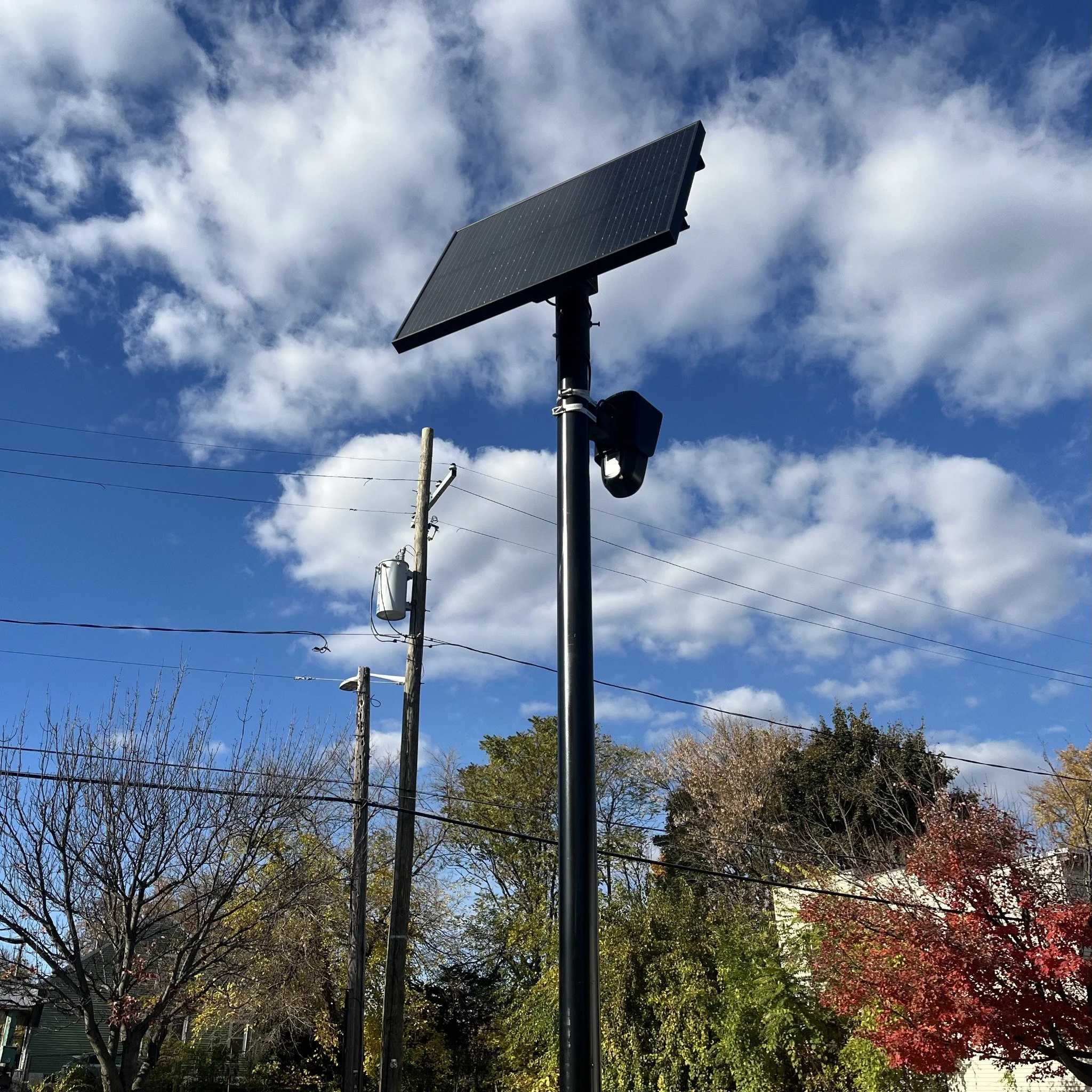
A Flock Safety license-plate reader at the intersection of Quail and Third streets in Albany on Oct. 31. Photo credit: Gavin Hayes / The ASP
The city of Albany agreed to extend its Flock Safety contract through Dec. 31, 2026, in May 2025. A review of city records obtained through a Freedom of Information Law request and local news coverage did not reveal whether Albany has exercised its option to extend the contract through 2027.
On June 18, 2024, the city entered an agreement with Flock to purchase and install 10 fixed and three mobile license-plate readers. The 13 readers do not necessarily represent the total number of Flock cameras in Albany.
An online community-reported map from Flock Camera Locations lists 91 license-plate readers within five miles of the location returned when “Albany” is entered, as of Oct. 31. This is a community-reported map. Locations may be incomplete, incorrect, or out of date. The five-mile radius extends beyond city limits and a figure of 91 cameras does not establish an accurate total of how many cameras the city of Albany operates.
Albany police spokesperson Derek Ellis said the city uses license-plate readers and other technology to “address all public safety concerns, including crime, terrorism and the search for vulnerable missing persons,” WAMC reported Sept. 8.
The public safety concerns listed by Ellis have occurred within the past three months.
An Oct. 4 shooting near Hudson Avenue and Partridge Street resulted in the death of a 15-year-old boy, according to the Albany Police Department’s official statement.
On Aug. 19, Jessica Bowie was arrested for an alleged plot to attack the New York State Capitol, according to the United States Attorney’s Office press release.
On Sept. 24, Tania Harris, 17, was reported missing, according to the Times Union.
The sources reviewed for this article do not establish whether Flock Safety’s technology assisted investigators in those cases.
The Rensselaer County District Attorney’s Office credited Flock with helping locate Juan Rivera, who was convicted of first-degree manslaughter for fatally stabbing Kevin Hall Jr. on April 21, 2025. The office explained in a June 30, 2026, news release: “Flock
ALPR cameras were used to locate the vehicle Rivera fled in and assisted in his capture hours after the killing.”
A Flock Safety label on the base of a camera pole at Quail and Third streets in Albany on Oct. 31. Photo credit: Gavin Hayes / The ASP
Albany has seen opposition to Flock Safety technology. On Aug. 17, Indivisible Albany organized supporters to attend an Albany Common Council meeting. Albany resident Tor Loney said, "Although Flock claims to care about safety, their cameras are used to stalk women, spy on children in parks and gymnasiums, and track citizens engaged in activities New Yorkers fight to protect, such as legal abortions, immigration hearings, and nonviolent protests," according to WAMC.
Albany County Sheriff Craig Apple said his office learned Sept. 4 of investigator Laurie Moore’s alleged misuse of Flock Safety’s database, USA Today reported.
Sheriff’s office attorney Caitlin Mattos told the newspaper, “We began our investigation after we received your email.”
Apple said Moore conducted more than 4,000 unauthorized searches involving five acquaintances, including approximately 3,000 searches for her former girlfriend’s vehicle. Moore, 47, was arrested Sept. 9, 2026, and charged with two misdemeanors: second-degree falsifying business records and official misconduct.
Apple announced monthly audits, supervisor approval of searches and required case numbers, saying, “What happened here is a breach of that trust, and for that, I’m truly sorry,” according to WAMC.
In a news conference, Apple said, “It’s a necessary tool. We need this tool to combat evil, OK?” according to WAMC.
DeFlock New York coordinator Matt Brockbank told WAMC in September that he believes Flock is “not the way to go.”
In an August interview with Spectrum News, Brockbank expressed concerns about surveillance: “As soon as you step outside your front door, you are immediately, I mean immediately, being surveilled.”
Brockbank also told the Rockland County Business Journal in October, “Our freedoms have been eroding since 9/11, since the Patriot Act.”
The agreement between the city of Albany and Flock Safety requires written notice to Flock before Dec. 31, 2026, to exercise the 2027 extension. The city can terminate the contract at any time, with or without cause, by giving Flock Safety 30 days’ written notice.
“Concerns regarding privacy are certainly understood, but the overall goal is to utilize this technology to enhance public safety,” Ellis said in a statement published by WAMC on Sept. 8.
Click here to read the full article in the Albany Student Press.
Why Too Many Meetings Can Be Detrimental
By Gavin Hayes
“I’m in meetings all day today!” said the unproductive employee required to attend meetings all day.
Meetings can be a powerful means of conveying information. Supervisors are afforded the opportunity to communicate news, expectations, and information that requires scheduling. The opposite effect is just as powerful. Meetings can become redundant, lack substance, or involve employees not directly affected. Instead of doing the work, a meeting can provide the illusion that work is being completed. Articles and studies support both sides of this issue — my perspective remains pessimistic.
There is a time and place for a meeting. For example, a corporation is undergoing a merger. Employees need to be privy to information and proper conduct during that process. Meetings create a forum for conversation and ingenuity and allow employees to directly address their concerns or confusion — whether they want to attend is beside the point. “Meetings are the broccoli of work – widely disliked, but probably good for us anyway,” researchers David J. Deming, Katrine V. Løken, Alexander Willén and Yaling Xu wrote in a September 2026 working paper published by the National Bureau of Economic Research.
Ultimately, meetings will continue to happen, informing people of vital news. “I will receive information that will help me do my job better” was respondents’ leading motivation for worthwhile meetings, according to Microsoft’s 2023 Work Trend Index report.
The general disdain for meetings may grow from their abundance. “Attending too many can be highly stressful and tiring,” Ashley Whillans, Dave Feldman and Damian Wisniewski wrote about meetings in a November 2021 Harvard Business Review article. If an employee has a meeting every day or every other day, there may be an error in the company’s scheduling practices. It’s important to determine whether a meeting warrants the interruption of work. Even productive meetings can leave employees with too little time to complete the work being discussed.
Microsoft’s 2023 Work Trend Index report found that “the number one productivity disruptor is inefficient meetings.” Corporations are fond of conversations regarding workflows and their optimization. Microsoft’s findings prove ironic.
A hypothetical: an employee is required to attend a meeting, has to remove themself from their current task, and is now in a room with 10 to 20 people discussing a subject they are only indirectly affected by. The meeting itself can be very productive. A large number of items could be discussed that are important to the corporation. This employee isn’t the corporation; they are an individual with a skill set suited for their role. Their headspace has entirely shifted from the time they left their desk to the end of the meeting. They now need to regain their concentration and pick up where they left off.
In an ideal world, meetings involve the right people, have a distinct purpose and produce a summary that can be emailed to those who can’t attend. Meetings should continue to happen — they possess qualities that empower employees and advance companies’ missions. A flowing conversation can lead to an unexpected destination, and employees have to hope the essence of that conversation can prove fruitful to their own purpose. Employers should be responsible for ensuring meetings are relevant and worth employees’ time.
Harvard Business Review — “The Psychology Behind Meeting Overload”
https://hbr.org/2021/11/the-psychology-behind-meeting-overload
Microsoft Work Trend Index — “Will AI Fix Work?”
https://www.microsoft.com/en-us/worklab/work-trend-index/will-ai-fix-work
NBER — “Meetings”
https://www.nber.org/papers/w35706
UAlbany Collected Over $800,000 in Parking Ticket Payments from 2023 to 2026
By Gavin Hayes
Parking citations increased 24% from January through August 2026 compared with the same period in 2025. Students reacted to the findings in interviews, while UAlbany’s parking director addressed enforcement and appeals by email.
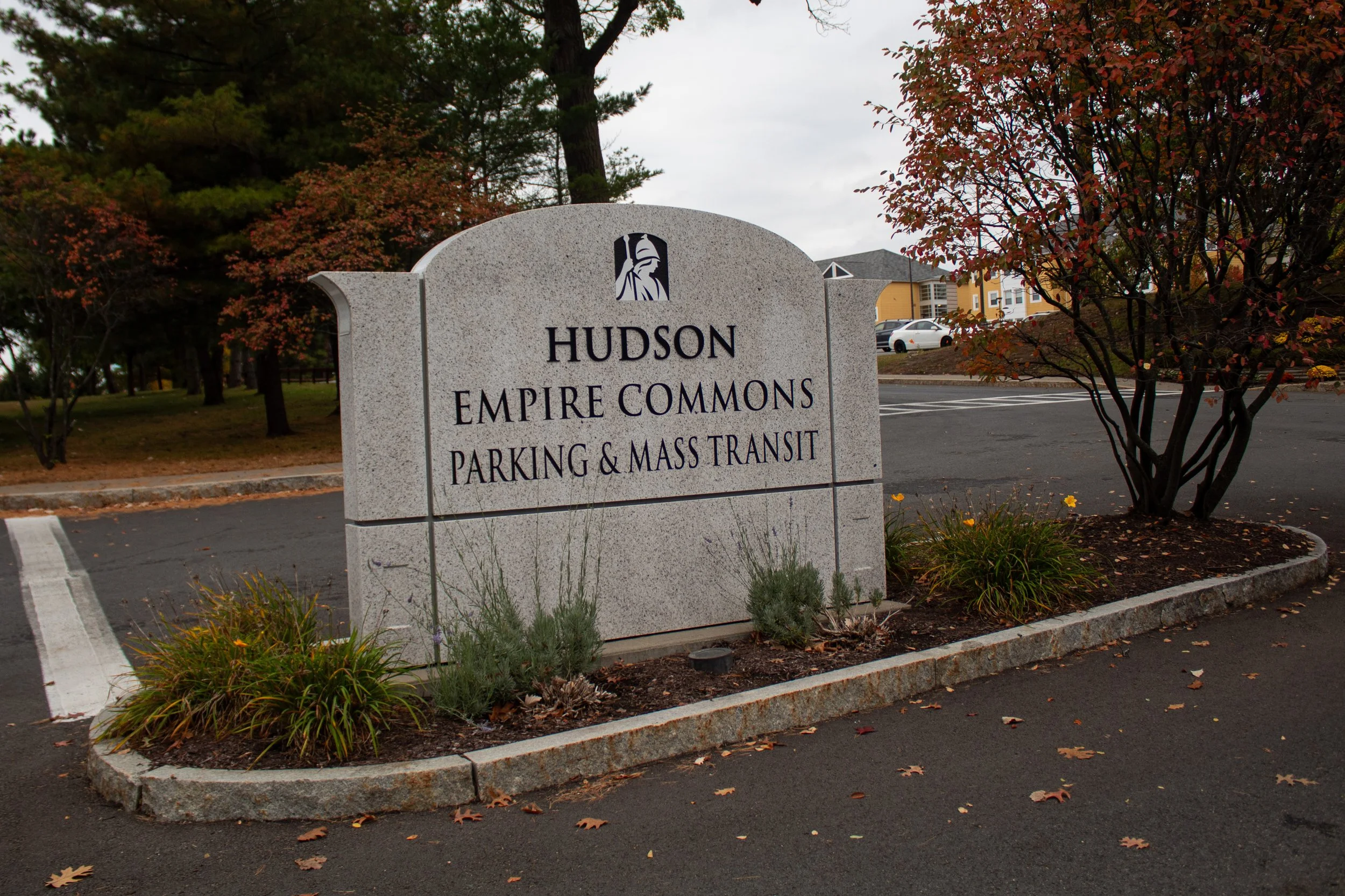
A sign marks the entrance to Hudson, Empire Commons and Parking and Mass Transit Services at UAlbany on Oct. 13. Photo Credit: Gavin Hayes / The ASP
According to records obtained through a Freedom of Information Law request, UAlbany collected $809,622.77 in parking-ticket payments from Aug. 1, 2023, through Aug. 31, 2026.
The director of Parking and Mass Transit Services, Jason Jones, said in an email, “The $809,622.77 represents all payments, full or partial, and all methods of payment. It represents collections over the three-year period, not the value of citations issued in any single year.”
UAlbany issued 24% more parking citations from January through August 2026 than in the same period in 2025. The records list 6,426 citation entries from January through August 2026, compared with 5,174 during the same months in 2025.
When asked about the increase, Jones pointed to the university’s new license plate recognition system.
“In June 2025, we implemented a new parking management system using License Plate Recognition (LPR) technology. The system has improved operational efficiency, including identifying parking violations, while providing a more convenient customer experience,” Jones said.
When asked to clarify warnings and voided citations and data recording methods, Jones again pointed to LPR technology, saying, “As part of the new system, we are able to take an even more customer-focused approach. First-time violations may receive warnings, and courtesy voids may be issued when appropriate. We seek to emphasize education and correcting parking behavior through warnings and, when appropriate, voids.”
Reacting to the amount of money collected from parking citations, Bolaji Daniel, a junior majoring in electrical and computer engineering from Staten Island, said, “I was actually shocked. That's a lot of money.”
Sean Robertson, a junior from Newburgh majoring in accounting, felt citation collections could be used to benefit students. “Maybe they could use that money instead of having people pay the $50 for the parking pass; they could maybe use some of that to help students out,” said Robertson.
“I know some schools have free parking, like I think the University of Buffalo has free parking,” said Robertson. University at Buffalo students who pay the transportation fee can register for standard parking permits at no additional cost. According to the university’s Parking and Transportation website, a portion of that fee covers registration.
“Well, for me personally, when I heard $800,000, I thought that was a lot of money, and I'm wondering how that money is being used,” said Shinny Htoo, a sophomore human biology major from Albany. Jones’s email did not address how parking citation collections are allocated.
From August 2023 through August 2026, 62.5% of parking citation appeals were granted.
Jones clarified the figure: “The 62.5% includes both first- and second-level appeals. A ‘granted’ appeal means the citation was fully dismissed. This is in addition to the warnings and voids noted above, which together reflect a fairly flexible approach to citation resolution."
Jerome Eugene Agnas, a junior accounting major from Albany, reacted to the appeal figures.
“If there weren't that many appeals, I think it would have been way more than $800,000,” said Agnas.
Robertson also wondered if confusion could contribute to citations.
“I guess the biggest factor that I would think of is just students not realizing,” said Robertson. “I know for State Quad it can be confusing, because there's not really a clear divide of the two parking lots.”
The records also showed when and where citations were issued. From August 2023 through August 2026, UAlbany’s citation records include 152 distinct location labels; 3,484 citations have no recorded location.
Five recorded location labels accounted for 27.9% of UAlbany’s citation records: Colonial Quad Gold B (2,997), Indigenous Lot (1,550), State Quad Gold (1,309), Indigenous Quad Faculty Staff (1,140) and Visitor Lot 3 (1,069).
About one in five recorded citations (19.7%) were issued during the 9 a.m. hour.
Jones addressed both trends and missing location information.
“Colonial Quad Gold B continues to be a challenging location. Despite outreach, warnings, and waivers, unauthorized resident parking continues. The 9–9:59 a.m. citation activity generally coincides with a busy morning parking period. As for the 3,484 citations with no location listed, we would need to review the underlying data more closely to determine the reason, which would require a more extensive analysis,” said Jones.
Recipients have 14 calendar days from citation issuance to pay or submit a first appeal, if eligible, according to UAlbany’s Parking and Mass Transit Services website. Full appeal instructions, eligibility requirements and information about penalties are available on the university’s parking citations page.
Note: Citation, collection, and appeals data within this article are based on records obtained from the University at Albany in response to a request under New York’s Freedom of Information Law (FOIL).
Click here to read the full article in the Albany Student Press.
From Colonie to ESPN: Michael Johnson Jr.’s Young Career in Broadcasting
By Gavin Hayes
Michael Johnson Jr. broadcasting at the Puerto Rico Classico in 2025. Photo Credit: Alex Henderson / UAlbany Athletics
The voice of the UAlbany Great Danes contemplates a trip to Delaware amid a logistical nightmare. A production-equipment fiasco and five hours in the car stand between Michael Johnson Jr. and doing the job he loves. Johnson, better known as M.J., is a former University at Albany student who now works for UAlbany Sports and ESPN 104.5 “The Team.” “Day in the life, brother,” M.J. said when asked about the predicament.
Things were not always so complicated in M.J.’s early broadcasting career. As a teenager, he would mute games on television and practice calling the action himself. “The women’s volleyball team won the America East. It was a sellout gym with hundreds of people. It was really loud, and I started realizing, ‘Wow, people are probably not even paying attention to what I’m saying.’ It was a good experience. It helped shape what I do now in a weird way.”
Click here to read the full article in the Albany Student Press.

Yaya Keita’s Journey from Mali to UAlbany
By Gavin Hayes
Left photo courtesy of Alex Henderson (Assistant Director of Communications, UAlbany Sports), right photo courtesy of Yaya Keita.
University at Albany graduate student and basketball player Yaya Keita has made a major impact off the court. Since 2019, Keita has supported children in his home city of Koutiala, Mali. His organization employs 16 people and provides food, schooling, clothing and structure to 81 children.
"Seeing kids on the street not having clothes, not having food, no shoes—I had to be a mature person from a younger age,” Keita said. “I didn’t like the way we were living. So I was like, if anybody can change, it’s me.” “It’s like you smell heaven,” Keita said. “To see and feel the truth and feel the hope in their life is a huge, huge, huge feeling.” Keita hopes to transform the organization into a formal school.

UAlbany Students Sound Off on Gov. Kathy Hochul’s CAP Initiative
By Gavin Hayes
Four UAlbany students voiced a range of opinions on Gov. Kathy Hochul’s CAP (Championing Albany’s Potential) initiative.
Thoughts of revitalizing Albany revealed conflicting opinions among a small group of UAlbany students. The CAP initiative is a $400 million state-funded effort, with $200 million allotted to downtown Albany and adjacent neighborhoods within a mile of the State Capitol, according to Empire State Development. The plans consist of investments in housing, public spaces, infrastructure, cultural attractions and public safety, according to Empire State Development. The investments could change everyday life for students, potentially affecting off-campus housing, transportation, and time spent downtown.
The students differed on how public safety should be addressed. “That’s where you invest into the community. If you’re getting the people to do the right thing, then you really don’t need that many cops,” said Sean Robertson, a junior from Newburgh majoring in accounting. In a February 2025 interview with WAMC Northeast Public Radio, Corey Ellis, the president of the Albany Common Council at the time, took a similar stance. “And what I say throughout our city is, when you create stable neighborhoods, you don’t have the gun violence that you have. When you create economic opportunity for folks, you don’t have the gun violence that you have,” Ellis said.
Click here to read the full article in the Albany Student Press.

UAlbany Students Learn the Basics of 3D Printing
By Gavin Hayes
Students came together last Tuesday night for an introduction to 3D printing.
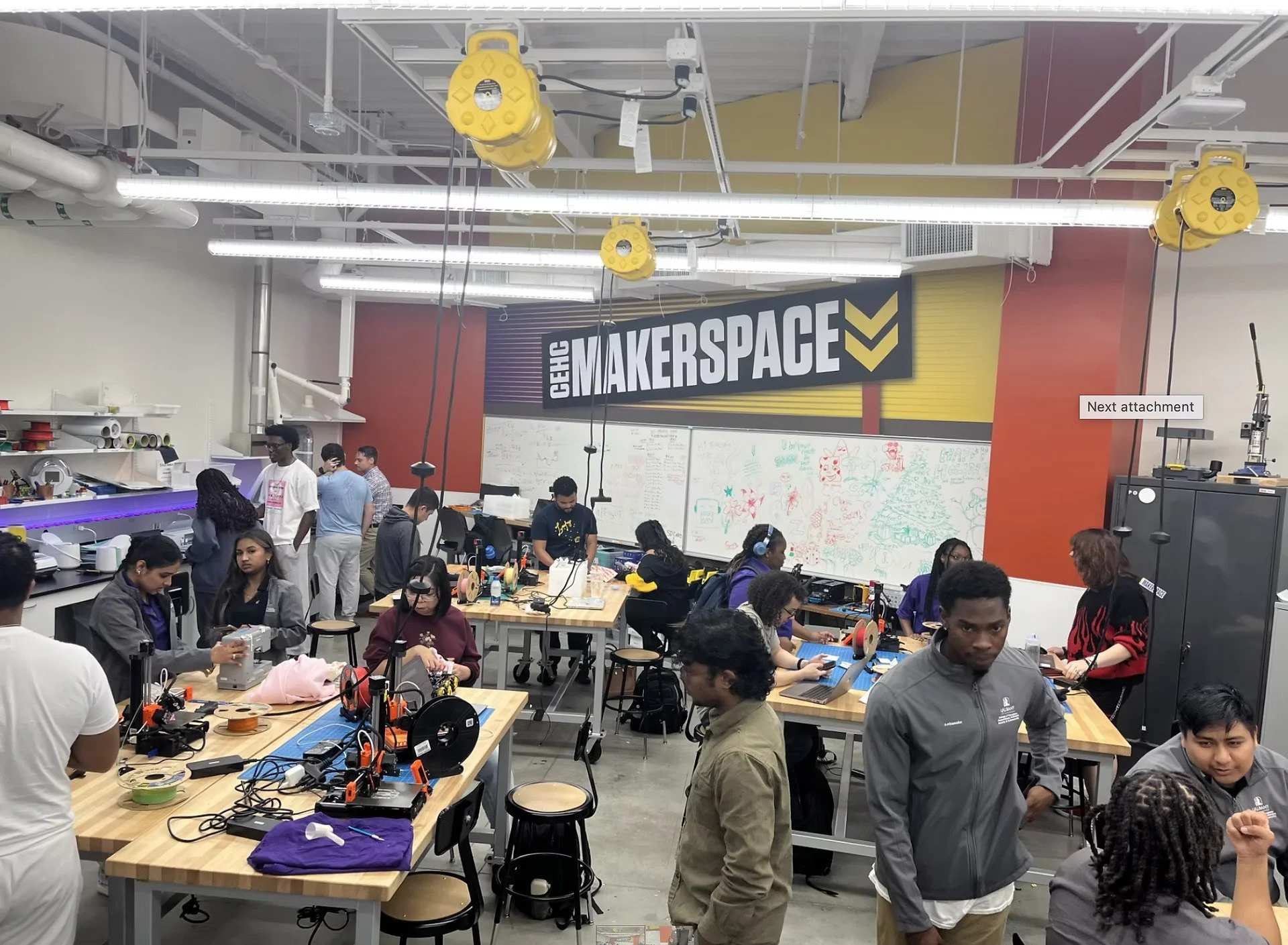
Students gather inside the CEHC Makerspace during Makerspace Night: 3D Printing on Tuesday, Sept. 15. Photo credit: Gavin Hayes / the ASP
Students gathered recently at the CEHC Makerspace in the ETEC building to learn the basics of 3D printing during a hands-on workshop open to all experience levels. The workshop, located in the CEHC Makerspace is in the basement of the ETEC building, room B037, introduced students to the fundamentals of 3D printing, from finding digital models to preparing designs for printing.
Senior Jo Bonfiglio, an informatics major from Staten Island, spoke bluntly about the Makerspace. “Here, we have a space where you can literally make anything you want,” they said. Bonfiglio is an intern at the CEHC Makerspace, helping students with their 3D printing ambitions. “I feel like not enough people know this place exists,” Bonfiglio said. The most common questions Bonfiglio receives are, “How does it work? How do I print something? Where do I find the models or make the models to do it?” As an intern, Bonfiglio focuses on guiding students in the right direction and providing them with resources.
Click here to read the full article in the Albany Student Press.